









BRUSSELS - Imagine biking through 18 different countries to fight for your rights? 'Ride For Your Rights' did it to support student mobility. And now they are looking for new members!
BUCHAREST - The European Students’ Union (ESU) believes that the Bologna Ministerial Conference on 26 and 27 April in Bucharest is a great opportunity to revitalise the ongoing standstill of the Bologna Process by investing the highest possible
level of public money in higher education.
BUCHAREST – Karina Ufert from Lithuania was elected as the new Chairperson 2012-2013 of the European Students’ Union (ESU) on 22 April in Bucharest. Ufert: “European governments are looking for ways to cut their spending to keep or get their economies
back on track. Only by making the right choices and prioritising education, we can get Europe out of the crisis in a socially and economically sustainable way.” Ufert and her new team will take office on 1 July.
BRUSSELS – The ESU Activity Report 2011 is online now. The report describes the main activities of the European Students’ Union in 2011 and provides an overview of student campaigns and demonstrations in Europe in 2011.
BRUSSELS – The European Students’ Union (ESU) is very concerned about the future of the European Higher Education Area (EHEA) at the dawn of the Ministerial Meeting on the Bologna Process in Bucharest on 26 and 27 April. In its analysis Bologna With Student
Eyes 2012, published on 18 April, it concludes that ever since 2009, the Bologna Process has been sliding backwards in some key action lines such as the social dimension, financing of mobility and sustaining e
ROME – The European Students’ Union (ESU) fears that deregulating the Italian higher education sector will have a very negative impact on the future of academic degrees. In an attempt to liberalise their economy, the Italian government wants to give universities
carte blanche concerning who can give academic diploma’s and wants to get rid of the legal validity of degrees. “This idea should be abandoned as soon as possible as it may lead to a loss of quality of university programmes.”
BRUSSELS – “Requiring a person to work for a certain number of years in Hungary after completing education could potentially be an obstacle to free movement of workers”, writes the European Commission in reply to an urgent letter from the European Students’
Union (ESU) on the new Hungarian Higher Education bill. The Commission letter is dated 22 March.
BRUSSELS - Given the rapid changes in higher education and numerous ongoing reforms, especially in funding systems, the eight Bologna Process Ministerial Conference aims to be yet another milestone in establishing the European Higher Education
Area. The conference is to take place on 26 and 27 April in Bucharest, Romania.
COPENHAGEN - The 23rd European Students Convention discussed employability and employment from 17 to 19 March in Copenhagen.
BUCHAREST - The European Students’ Union (ESU) will elect a new Chairperson during its 62nd Board Meeting in Bucharest, Romania, on 22 April. The fight for the helm of ESU will take place between Karina Ufert (Lithuania, currently ESU Vice-Chair) and Magnus
Malnes (Norway, currently member of ESU’s Academic Affairs committee). Next to this, the Board of ESU will elect two new Vice-Chairs and 7 new Executive Committee (EC) members.
BAKU – Some barriers to student involvement in Azerbaijan still exist, possibly due to the geopolitical situation and the political history of the country. This is one of the conclusions from the visit of an ESU delegation to ATGTI, Candidate Member of
ESU, which took place between 4 and 11 March. ATGTI is the acronym for the Azerbaijan Student Youth Organizations' Union (also known as ASYOU). Azerbaijan only recently joined the Bologna Process.
BRUSSELS – The European Students’ Union (ESU) calls for more access to education mobility by linking the size of Erasmus grants to the socio-economic background of a student. It also makes a strong fist against the EU Loan Guarantee Scheme, part of the
‘Erasmus for All’ programme, proposed by the European Commission in November 2011.
BRUSSELS – The European Students’ Union (ESU) gives its full support to the pan-European street protests against the regime in Belarus, on 18 March. The action is organised by the Young European Federalists (YEF). Allan Päll, ESU Chairperson, said: “The
President of Belarus, Alexander Lukashenko, is continuously repressing the people in the country for the past sixteen years. ESU has seen a vast amount of violations of human rights and has especially been concerned about the situation
BRUSSELS - The second QUEST (Quest for Quality for Students) project Workshop took place in Brussels from 8 to 12 February. Around 25 students from all over Europe engaged in different training activities like debates, group work and brain storming exercises
and pondered how more quality can be achieved through student involvement and engagement.
PRAGUE – The European Students’ Union (ESU) gives its strong support to the week of student protests in the Czech Republic, which take place from 27 February to 2 March all around the country. Czech students are protesting against two new law proposals.
The biggest students protest march will take place in Prague, on 29 February.
COPENHAGEN - As Denmark currently holds the rotating EU Presidency and the 23rd European Students' Convention is jointly organised with the Danish national union of students DSF, ESU made an interview with the new president of DSF, Torben Holm.
that for Danish students, the higher education debate focuses on the financial situation of students and their employability.
LONDON – Jude Law and the European Students’ Union (ESU) launched the Global Truce Day student campaign, in London on 27 February. The Global Truce Day is an initiative from Peace One Day, an NGO led by Jeremy Gilley, that ignited the establishment of
the annual Peace Day on 21 September.
BRUSSELS – The European Students’ Union (ESU) urges the EU ministers for education to put pressure on Hungary during the Education, Youth and Sports Council (EYSC) in Brussels on 10 February. Budapest recently adopted a new law on higher education that,
according to ESU, represents an unjustifiable restriction of freedom of movement for workers and is a violation of the 45th Article of the Treaty of the European Union (TFEU).
COPENHAGEN - European stakeholders in higher education in the E4 Group have proposed that the European Standards and Guidelines for Quality Assurance (ESG) should be revised. This is the core recommendation of the MAP-ESG report that was launched at an
event in Copenhagen on 17 January
COPENHAGEN - The Bologna Follow-Up Group discussed the draft Bucharest communiqué at their last meeting in Copenhagen on 18 and 19 January. The communiqué is to be signed by ministers at a conference in the enormous Palace of the Parliament in Bucharest
on 26 and 27 of April. In relation to this, the BFUG also discussed the progress report of the Bologna Process reforms in all 47 member states of the European Higher Education Area.
LONDON – ESU’s working group on International cooperation (ICWG), established in to facilitate the European Students’ Union communication from with student bodies globally, has had a first planning meeting this year, hosted by NUS UK, on 28 and 29 January
in London.
BRUSSELS - The European Students Union (ESU) welcomes the conclusion of the Bologna Follow Up Group (BFUG) that Belarus should not become member of the European Higher Education Area (EHEA) without reform first. On 30 November 2011, Belarus officially
applied
to become a member of the area but the Bologna Follow Up Group decided to advise against EHEA membership of Belarus at its meeting on 18-19 January in Copenhagen.
BRUSSELS - The ESU project on Financing the Students' Future (FINST) aims to increase the knowledge of the effects of financing systems in Europe on students and works on the capacity building of the NUSes. Here you can find four research articles from
the research team of the project.
BRUSSELS - The European Students' Union (ESU) opens the call for the FINST student exchange in cooperation with the Federation of Estonian Student Unions EUL, to take place in April 2012. ESU invites all the members of the National Unions of Students.
to apply to take part in the last of three student exchanges which will take place as part of the ESU project Financing the Students' Future (FINST), funded by the European Commission Lifelong Learning Program.
BRUSSELS - (Editorial Allan Pall, Chairperson ESU, in University World News) In a year that was marked by the euro crisis, and bailouts not only of banks but also entire sovereign countries, it is not surprising that higher education in Europe has taken quite a battering. Despite widespread agreement that higher education is a public good first and foremost, and thus a public responsibility, current trends paint an interesting picture, to say the least.
BRUSSELS – Strong commitments to increase public funding of higher education. This is what the European Students’ Union (ESU) wants the EU education ministers to come up with during the debate about financing of education that they will hold at the Education Youth and Sport Council (EYSC) on 28 and 29 November. ESU urges the ministers to free up money for higher education and for EU-wide student mobility instead of cutting down the budgets, which is currently the case in many EU countries.
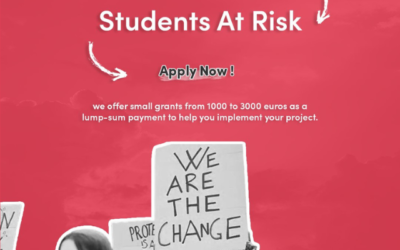
LONDON - The National Union of Students (NUS UK) has launched a new project called I Am The Change to encourage and support you to campaign for positive change at your college or university.
LIVERPOOL – Who should pay for higher education? The students themselves, the state or should companies contribute as well? These questions will be answered at the ‘Financing the Students’ Future’ conference from the European Students’ Union (ESU) which takes place from 24 to 26 November in Liverpool.
BRUSSELS – The European Students’ Union (ESU) is pleased to see that the European Commission’s budget proposal ‘Erasmus for all’, published on 23 November, acknowledges the added value of learning mobility and internationalisation of higher education. However, ESU urges for more relevant budgetary commitments as it deems this is crucial to achieve opportunities for student mobility for all.
DUBLIN – An estimated 50,000 Irish students hit the streets of Dublin on 16 November in an attempt to avert a dramatic increase of their tuition fees. The Irish government is expected to announce an increase in their budget plans, on 7 December. Tuition fees in Ireland currently stand at 2,000 euro. Chairperson of the European Students’ Union (ESU) Allan Päll said: “We strongly oppose this development which runs across students all over the European continent. Reduced public financing will
BUCHAREST – The European Students’ Union (ESU) calls upon the Romanian Ministry of Education to stop postponing the adoption of the much debated Student Statute. Allan Päll, ESU Chairperson said: “Since the Romanian students issued their proposal, their ministry has been reluctant to discuss the Statute. They should make an effort to get this statute adopted before the end of the year as it is of tremendous importance for the students and for the credibility of Romanian higher education system.”
LIVERPOOL - ESU’s project Financing the Students' Future (FINST) is set to address issues that students are facing with financing and tuition fees. This is done by increasing the knowledge of how different financing systems and current changes affect students
and by increasing the capacity of national unions of students and student representatives.
SOFIA – The European Students’ Union (ESU) will hold its 61st Board Meeting from10-12 November in Sofia, Bulgaria. Around 150 student representatives from all over Europe will discuss ongoing issues in higher education and will formulate common statements. Pressing issue on the agenda is the EU loan scheme, part of the EU’s proposals of the Modernisation Agenda.
PARIS – Representatives of the national Chilean student body CONFECH are travelling through Europe this week seeking international support for their ongoing fight for reforms in the Chilean national education system. Karina Ufert, vice-chairperson of the European Students’ Union (ESU) will meet representatives of CONFECH at a conference of UNEF (*) in Paris on 18 October to support their cause.
BRUSSELS - The European Students' Union (ESU) has published its full reaction to the European Commission's Modernisation Agenda for Higher Education on 12 October. In ESU's press release on the modernisation agenda, published on 20 September, ESU Chairperson, Allan Päll, said: “The EU’s Executive has failed to send out a clear message about government investments into higher education. We furthermore do not agree on their objective to promote mobility mainly through loans and private contributio
NICOSIA – Attempts from the Cypriot government to cut its budget deficit will lead to lower student grants. The European Students’ Union (ESU) is deeply concerned about the government decision to cut the social transfers by 10 per cent in order to save 200 million euro. ESU strongly supports the protests on 27 September from POFEN, representative body of Cypriot students, against this development.
BRUSSELS – The European Students’ Union (ESU) is utterly disappointed that the European Commission’s Modernisation Agenda, published 20 September, for Higher Education promotes student debt. Allan Päll, ESU Chairperson, said: “The EU’s Executive has failed to send out a clear message about government investments into higher education. We furthermore do not agree on their objective to promote mobility mainly through loans and private contributions.”
BRUSSELS – The European Students’ Union (ESU) is cautious towards the OECD report Education at a Glance 2011. One of the main conclusions of the report states that people with university degrees have suffered far fewer job losses during the global economic crisis. Allan Päll, ESU Chairperson, said: “Although this shows how important increased and effective investment into higher education is for societies and individuals, we do not think that the success of higher education institutions should o
LAZY – The European Students’ Union (ESU) backs the massive protests in cities all across Israel which took place on Saturday night, 3 September. Allan Päll, ESU Chairperson, said: “The Israeli government should listen to its people. It is clear that they are strongly affected by the ongoing budget cuts. Too many times, funding for the weakest in society, including students, has seen a decrease.”
ARBIL - An ESU delegation consisiting out of four people visited the Kurdistan Region in Iraq from 20 to 23 of August to meet with the Kurdistan Student Union (KSU) and learn about the situation of students and higher education in the region. Higher education has expanded majorly in this region in the last decades, which has led to a massive shortage of places at universities, leaving 7000 people waiting to enter university.
BERLIN - The Bologna Follow Up Group on Mobility met on 24 August in Berlin to finalise the draft proposal of mobility strategy that will be adopted by ministers at the BFUG ministerial conference in 2012 in Bucharest. The European Students’ Union (ESU) welcomes the extensive and comprehensive strategy proposal that the draft paper of the BFUG brings to the debates on future development of student mobility in Europe. However, ESU acknowledges the paper still lacks clear emphasis on the purpose a
BRUSSELS – The European Students’ Union (ESU) fears that the recently proposed EU long-term budget (2014-2020) will be insufficient to cover for the expectations raised by the EU member states in their Europe 2020 Strategy. Allan Päll, ESU Chairperson said: “Although there is certain progress reflected in the proposals, the overall investment level into higher education is not proportional. If the EU wants to succeed with the Europe 2020 strategy a clear and radical re-allocation of EU funds tow
BRUSSELS - At the moment, there are several policy instruments in place that support improvements of the quality of higher education on an ongoing basis. However, according to the European Students Union, there is still a clear lack of true student involvement in this area. The recently started ESU project dubbed 'QUEST' intends to change this.
The EQUNET project in which ESU has been involved has delivered its first report that gives a comparison of the state of equity in access to Higher Education in the EU27 + EEA countries, and of the evolution of the concept and the actual state of diversity in Europe’s Higher Education institutions today.
OSLO - Croatian student Duško Kostic, the winner of the Student Peace Prize 2011, will be honored with a ceremony on 18 February in Trondheim, Norway. According to the Chairperson of the European Students Union, Bert Vandenkendelaere: “Kostic and his work highlight two important issues. The first is that education is crucial for groups who are trying to overcome discrimination and social exclusion. The second is the extraordinary role that students can play in changing their societies.”
On September the 8th, the European Commission released a paper entitled “Efficiency and Equity in European Education and Training systems” . In this communication the European Commission openly supports tuition fees, but backs up its’ suggestions with flawed arguments and unsubstantiated claims.
From 23rd - 26th of September, ESIB held a Bologna-Lisbon training in Ljubljana hosted by the Student Union of Slovenia (SSU). With close to 80 participants and 14 trainers, the event was an important landmark in educating people as to the realities and issues surrounding both the Bologna Process and the Lisbon Strategy.
Dear Friends,
Welcome to the new ESIB website!
An ever growing organisation like ESIB – the representative body of 45 national unions of students in Europe - needs a flexible and dynamic website that can services its communication requirements.
Thus, we aim to have an up-to-date website that will bring you the latest news, policies and information on the European Student Movement and the European Higher Education arena.
The debate on the "external dimension" of the Bologna Process continues to be an interesting one. Indeed, it sometimes seems as if this topic includes everything from European identity to support services in higher education institutions. Recently, ESIB participated in the last of three seminars on this topic, hosted by the Nordic governments in Oslo, Norway.
Last weekend 2 ESIB representatives attended the General Assembly of the EuropeanYouth Forum, which was held on the 9-12 November in Vilnius , Lithuania. Besides adoption of the Strategic Priorities for the European-wide youth organization until 2012 and adoption of a Plan of Work and budget for 2007-2008, the Assembly elected new leadership of the organisation for the term of the following two years.
International Student Day. You react - What? When? Why? This is an important day for everyone. Some spend it celebrating, remembering the good old days of being a student; others celebrate the chance of having this status today. This day exists to unite many people, not just current students, around the idea of striving for change and progress, the idea of being active and caring for society, of feeling and expressing solidarity with other people, nations and parts of the world who face the coll
17 November 2006 in Europe - International Students' Day:
Find out what the National Unions are plotting!
Last Wednesday, the European Commission passed the services directive with an overwhelming majority in favour. After a year of campaigning by ESIB and other educational NGOs, education has been predominantly left out of the directive.
The 51st ESIB Board Meeting is underway. 120 participants have gathered in Paris until the 3rd of December, to attend the seminar and Board Meeting organized by L’UNEF . Tuesday and Wednesday see ESIB hold a seminar on the “Social Dimension in Action”.
ESIB’s 51st Board Meeting took place in Paris, from November 30th – December 2nd and welcomed 120 members representing 43 national unions.
Ministers of Education from Armenia, Georgia, Moldova and Ukraine met on 12-13 December 2006 at the Council of Europe in Strasbourg to discuss the state of implementation of Bologna reforms and upcoming challenges in their countries. The four countries and Azerbaijan, which unfortunately could not be present, are those countries who joined the Bologna Process most recently in 2005 in Bergen (Norway). ESIB participated in the conference as observing organisation.
ESIB's member union, ÖH – The National Union of Students in Austria, is currently holding a solemn vigil in front of the Social Democratic Party of Austria (SPÖ) headquarters. ÖH has been protesting there since December 11 in order to put pressure on those who are currently holding negotiations to form the future government and to remind them of one of their main topics during their recent election campagin: The abolition of tuition fees.
Tuition fees will stay, but those students who do 60 hours or more of social work per semester will get their money back. This is the newest - and so far most absurd - outcome of the discussion about tuition fees, which are an issue in the negotiations towards a new government in Austria. Fees were introduced in 2001, accompanied with heavy critique from ESIB member, the Austrian National Union of Students (ÖH).
On 11 and 12 January 2007, the first meetings of the Project Partners and the Advisory Board of the EQF Stakeholder Project were held in ESIB's Brussels office. The partners and the Advisory Board discussed the national dialogues on the stakeholders' experiences with the implementation of the European Qualifications Framework for Lifelong Learning (EQF-LLL) in the 5 countries participating in the project.
Throughout this year, the 5 national project partners will organise stakeholder meetings t
Brussels (ESIB), January 24, 2007 - ESIB – the National of Students in Europe has been receiving alarming news proving that student persecution in Belarus still persists.
On 27th of December Nadzeya Mantsevich, who represented the Belarusian student movement during the ESIB Board Meeting in Belgrade (May 2006), was expelled from her university – the Belarusian State Pedagogical University.
The formal reason given by authorities was "systematic breaching of discipline and university rules"
The 4th official Bologna Seminar, focusing on the mobility of staff and students, will be held in London on the 8th-9th February this year. This event is co-organised with Education International (EI) and outlines ESIB’s good cooperation with this important organisation representing teachers and education workers worldwide.
During the Bergen Summit in May 2005, Education Ministers stressed the importance of mobility, and in the Communiqué, this is mentioned as one of the three main priorities f
ESIB’s Norwegian members have taken to the streets regarding the pension system in Norway today. The government recently proposed that the citizens will receive a pension calculated according to the income amassed during their working lives. Under this new system, students will not receive pension points for the duration of their studies, meaning that those following a longer course of study will automatically be disadvantaged.
On the 22nd of December, Belarusian Students gathered in the BSA (the National Belarusian Student Union and member of ESIB) offices in order to celebrate Christmas.
At around 11pm, as the party was coming to an end, militia, special troops and several civilians crashed the party armed with video cameras and asked all present to disconnect their mobile phones. No search warrant was provided despite repeated requests from the students.
More than 1.5 million students have benefitted from the Erasmus program but, sadly, these students often lose touch with each other.
From 11th-13th April, ESIB members will assemble in Malta for a student conference on the attractiveness of the European Higher Education Area (EHEA) and the external dimension of the Bologna Process.
This conference is the closing symposium in a series of conferences dealing with the Bologna Process and Lisbon Agenda as we move closer to 2010.
The conference will take place over 3 days between the 11th and 13th April at the Radisson Bay Point Hotel, St Julian’s, Malta. The arrival day is the 10th and the departure day is the 14th. The airport is the Malta International Airport in Luqa. Each delegate will be picked up from the airport.
Between the 16th and 19th March 2007, 140 student representatives from 40 countries gathered in Berlin to discuss their demands to the Ministers ahead of the upcoming London Ministerial Summit.
The discussions at this - the 13th European Students Convention, led to the recognition that the Bologna Process has triggered some of the largest and most crucial reforms of higher education policy in Europe.
Dear Friends,
Today Georgia and Georgian Students need your help and Support as never before.
You all should know about the situation and relationship that Georgia has with its Neighbor country Russian Federation. The Situation is very dangerous and tense.
May 6th-9th, London: ESIB will be holding a seminar on discrimination in Higher Education. ESIB’s third conference of the year focuses on a theme which is broader than just the scope of our curricula and higher education. Thanks to the Council of Europe's All Different All Equal campaign, we have the opportunity to discuss discrimination and how to continue fighting it as student unions. It is a great opportunity to organise a seminar on such an important topic, a fundamental building block of t
15th May: ESIB releases its third survey on how the Bologna Process is implemented around Europe. Covering 36 European countries, the report analyses how the commitments made in the Bologna Process are implemented in practice at national level. The authors deduce that many reforms are carried out only superficially: For example the European credit and transfer system ECTS should facilitate mobility and put the learner in the center, but countries are not implementing it properly. It is shown tha
May 2007: This year, ESIB- The National Unions of Students in Europe celebrates its' 25th year of representing students across Europe. In honour of this landmark, it was decided that some major changes were needed. ESIB was founded in 1982, initially as WESIB – the Western European Students' Information Bureau – soon to drop the Western in search of a more inclusive European platform.
17th & 18th May: The Higher Education Ministerial Summit on the Bologna Process, held once every two years, was hosted by the London Ministry. ESU, a member of the Bologna Follow-Up Group, was an active participant in the debates surrounding the implementation of the Bologna Process leading up to this summit.
31st May: This morning, AEGEE and ESU signed an agreement which aims to build closer ties between the two organisations. AEGEE is a student organisation with antennae all over Europe, aimed to promote a Europe without prejudices. The two organisations have already cooperated on several instances in the past, which has now resulted in the joint statement.
June the 4th: thousands of students across the globe took the time to remember those who paid the ultimate price in their struggle for basic freedoms on this day in 1989.
One million unarmed students took to the streets in the name of democracy, asking for an end to corruption, more jobs and basic human rights.
July 2007: “Educators joining together for quality education and social justice:” This is the theme that will unite more than 1,500 teacher leaders from around the world who will come to Berlin 22-26 July 2007 for the 5th World Congress of Education International (EI).
June 13th: Recently, more than ten students were summoned to the Public Prosecution Office where they were informed that data on their activity on behalf of the unregistered Belarusian’s Student Association was recorded by their offices. They were warned that if theu did not cease all activity, criminal cases would be opened against them.
June 2007: At the 52nd ESU Board Meeting in London the Student Union of Serbia (SUS) and the National Union of Students' Representatives of Lithuania (LSAS), singed a bilateral agreement, in the hope that joining forces will allow them to work better.
June 2007: Last week, The Ukraine and the EU signed an agreement aiming to facilitate visa obtention. Under the new agreement, a decision on whether or not to issue a visa will have to be taken, as a rule, within 10 days and the documents that need to be presented have been simplified.
Dear Friends,
We would like to tell you about a grave act that has occurred in one of the largest Universities of Romania.
During the recent audit carried out by the National Quality Assurance Agency of Romania – ARACIS at the Polytechnic University of Bucharest, the Evaluation committee organised a meeting with University students, in order to receive their input on the study conditions at the University.
July 2nd:On the 16th May, Yuras Aleinik, a student at the Management Academy of the President of the Republic of Belarus was informed that he was to be expelled from his university. The background of the expulsion appears to be politically motivated. Exceptionally, Yuras decided to fight for his rights in the court.
As ESU's Seminar on Discrimination in Higher Education drew to an close it was generally acknowledged by chairs and participants alike to have been highly successful.
July 22th-26th: Education International Congress: Over 1,600 representatives of Education Internationals’ member organisations were in attendance at the 5th World Congress held in the Estrel Convention Centre. The elected representatives and staff responsible for Higher Education within Education International reported on the work of the previous 3 years and present current issues.
The Organisation for Economic Co - Operation and Development (OECD) has published a new paper: "Globalisation and Higher Education" (Education Working paper No. 8). This publication explores the issues for national policy and for individual institutions.
The Institute for Higher Education Policy’s (IHEP) - www.ihep.org/gcpf/ - Global Center on Private Financing of Higher Education (GCPF) released a report that explores the growing importance of private capital to nations where governments seek additional resources to share the rising costs per student and increasing enrolment rates.
The new elected Prime Minister of Turkey, Recep Tayyip Erdogan, recently announced dramatic changes in HE reforms of Turkey. The changes include the abolishment of the current Higher Education Board (YÖK) System. The duties of YÖK will be overtaken by the Inter-University Coordination Board (ÜAK). Their plans of the new HE Board are to work on programs to coordinate between the Universities. With the new system, the rectors of the Universities will be elected by the University Senates.
ESU Member, POFEN (the Pancyprian Federation of Student Unions), is organising a conference on mobility for ESU members. This will take place in Limassol, Cyprus, from the 27th till the 30th of September this year. The conference will open in Nicosia in a session with the Ministry of Education and the President of the Cypriot Parliament.
19th September 2007: The OECD (Organisation for Economic Co-operation and Development) today released it’s yearly « Education at a Glance » report.
18th September 2007: The European Union has signed agreements with five Balkan countries which will make it easier for citizens of these countries to obtain EU visas, in particular students, journalists and business travelers. The concerned countries, Albania, Bosnia, Macedonia, Montenegro and Serbia had issued complaints that the visa rules were constraining them into a ghetto at the heart of Europe.
The E4 Group (ENQA, EUA, EURASHE and ESU) invites interested parties to file a tender for the development of a logo, document templates and a website for the European Quality Assurance Register in Higher Education (EQAR).
The tender shall be based on the terms of reference below and provide a detailed outline of the services offered, a breakdown of the total costs, references to third-party software, products or services the tenderer intends to use and references to similar services provided by
October 4th-5th: The closing conference of the 20th Anniversary of the Erasmus mobility programme celebrations was an overriding success. Close to a thousand participants were brought together for a final conference including discussions on the history and the past of the event. Jacques Delors (President of the Commission in 1987) recorded a video message for the gathered participants and many key people took to the microphone.
Happy birthday ESU!
Several name changes and 25 years of age have made you and your members a strong voice for students in Europe. Student involvement has never been so widely and generally accepted as it is today. So, although much remains to be done, it is fair to say that the European model of student involvement in higher education policy development and institutional governance at every level is something quite exceptional and an important element in the specific European dimension of hig
From Stockholm ……to Lisbon
Once upon a time a few pioneers gathered in Stokholm in 1982 to establish WESIB , an information sharing organisation and did not probably imagine that they were founding a European student trade union movement , now the umbrella organisation of 47 national unions of students from 36 countries representing over 10 million students.
Last May when ESIB became the European Student Union (ESU) EI welcomes this name change , signifying the work of ESU as a union, highl
On behalf of the European Commission, I would like to express my congratulations to the European Students' Union on its 25th anniversary. As you know, the EU is also celebrating an anniversary of its own-its 50th. There is a similarity in our histories: when seven national unions of students decided in 1982 to set up the West European Student Information Bureau
an end to the Cold War was not in sight and you had to start setting up the core of a European body that was, for the time being, restr
The 14th European Student Convention was a resounding success. Over a hundred participants descended on Lisbon for four days in order to discus the Lisbon Agenda from the perspective of European Students. Workshop topics included Employability in Relation to Social Cohesion, Financial Sustainability of HE, The Student Contribution towards the Lisbon goals, The role of HE in creating and environmentally sustainable society and HE and regional development.
ESU was delighted to welcome a student activist from the Western Sahara to our 14th European Student Convention. It was fascinating for our representatives to hear her story and understand the consequences student activism can have in some corners of the earth. Rabab told a rapt audience of her experiences -
Dear Visitor,
ESU would like to inform you that, due to no fault of our own, we have been experiencing technical difficulties with regards to our mailserver.
Romanian Higher Education is often a field of great contradictions and high volatility as government after government completes a never ending cycle of reforms and amendments on present laws. Of course, not all of these reforms plump to the interests of students, but most are beneficial to overall quality and to student welfare.
Why exactly do we celebrate students’ day in Europe?
Friday 02/02/2007: VVS, the national union of students in Flanders, handed over a petition with 18 000 signatures to the Flemish parliament. With this petition, VVS demands a hearing in the commission of education. The minister of education of Flanders is planning a new decree on the financing of higher education institutions.
December 4th 2007: Decisions of the 53rd European Students Union (ESU) Board Meeting concerning the Ukrainian student movement marked a very important step in the history of both the Ukrainian student movement and ESU. The history of contact and cooperation between Ukrainian students and ESU goes back to 2002. During the evaluation of the Ukrainian students movement since this time, it became quite clear to ESU, that there were two national unions of students in Ukraine that could potentially be
December 10th 2007: ESU and all its' members would like to extend a warm welcome to our new Israeli member, NUIS (The National Union of Israeli Students). The ESU board granted NUIS membership at the 53rd Board meeting held in Vilnius last week. NUIS is not the only national student union in Israel, but is by all accounts the largest, representing around 250 000 students who are members of NUIS's member unions.
December 12th 2007: Held in Barcelona over two days, the European Consortium for Accreditation (ECA) conference bought together representatives of governments, institutions, students, employers, recognition authorities, and other European and international quality assurance agencies.
November 23rd 2007: Dear Friends,
As some of you may have heard, there are currently a number of strikes and protests in France. In the next few days, UNEF will release an international Newsletter which will serve to inform all Higher Education actors, and especially student unions, of what is going on.
February 4th: The European Universities Association (EUA) has launched a new project to explore the state of Master’s programmes as the Bologna Process moves forward. EUA would particularly like to find out about students’ perceptions of “new” master programmes in the current Bologna period.
20th February: The European Commission is undertaking a project in 2008 of assessing the quality of 6 Erasmus Mundus master courses in order to establish good practice for the development of future programs.
February 13th: Erasmus Mundus has been established in 2003 to enhance international cooperation and mobility not only within the EU, but also beyond.
As such it is building on the experiences made with the EU mobility schemes ERASMUS and TEMPUS. Elements of the Erasmus Mundus program include the support of integrated master courses, scholarships for third—country nationals (i.e. students with citizenship outside the EU and candidate countries, EEA and EFTA), scholarships for EU students and
4th March: ESU unions from the Baltics and South Eastern Europe converged upon Budapest this past weekend for the second in ESU’s series of three regional trainings on the Lisbon Agenda.
4th March: The European Quality Assurance Register for Higher Education (EQAR) was officially launched in Brussels today in a move designed to improve the quality of European higher education and to promote greater student mobility.
5th March: More than 40 key EU and national lifelong stakeholders gathered at the European Commission to discuss a new vision of innovation in learning, that embeds ICT for learning as well as lifelong learning in a comprehensive and future-oriented perspective, and to share ideas and proposals on how to bring the Learnovation initiative forward.
April 21st: In march this year, The European Students' Union (ESU) and the Slovenian Student Union (SSU) organised the 15th European Student Convention in Ljubljana, Slovenia.. The topic was: Students for Democracy. The Slovenian presidency of the European Union supported the convention as a part of the agenda of the Slovenian presidency of the European Union. The convention will be co-organized by the Ministry of Higher Education, Science and Technology of the Republic of Slovenia.
May 10th: ESU is currently hosting its' 54th Board Meeting, along with Slovak member SRVS. Gathered in Brusno, Central Slovakia, 140 reprsentatives from ESUs member unions, are discussing the last six months of ESU work and deciding on the future courses of action. Of note, are the numerous elections which have taken place yesterday and today. The current volunteers end their mandate in July and will not be replaced post for post since ESU passed a new set of structures at its' last board meetin
May 15th: Erasmus Mundus is a cooperation and mobility program for European higher education. The official aim of the program is to enhance the quality of European higher education by fostering co-operation with third countries in order to improve the development of human resources and to promote dialogue and understanding between peoples and cultures. The program should promote Europe as a centre of excellence in these third countries and thus enhance the attractiveness. The European Commission
May 19th: ESU RELEASES ITS' POSITION ON THE PREPARATION OF AN UPDATED STRATEGIC FRAMEWORK FOR EUROPEAN CO OPERATION IN EDUCATION AND TRAINING
With this contribution to the preparation of an updated strategic framework for European co operation in education and training, the European Students’ Union, representing 11 millions of students in Europe, shares its vision on the future priorities for Higher Education policies after 2010. We will focus on the three strategic goals closely linked to th
The rules for entering higher education in Belarus are going to be changed soon. The attitude of the Belarusian state to higher education is also changing. The ministry in charge has already warned that there are too many specialists with higher education diplomas and a lack of labor force at the same time. What are the steps to be taken by the state to solve the problem?
The European Students’ Union was invited by the Organisation for Security and Cooperation in the European office in Yerevan (OSCE) to conduct a study visit of the Armenian students’ movement. This took place from the 8th-14th June. Our mandate was to assess the strengths and weaknesses of student councils in particular, within the general framework of the Armenian higher education sector. In this capacity, the study visit team carried out interviews with the main actors in the higher education s
In July ESU has launched the student trainers’ pool consisting of 13 young people, among them alumni of ESU and the national unions of students and ESU elected representatives, all experienced in trainings and higher education policy.
ESU is looking for a recently graduated, creative team player to fill the position of Information and Communication Officer (ICO) at its headquarters in Brussels, Belgium.
ESU is a member of the E4 group, which was mandated by the ministers in London to set up a Quality Assurance Register.
PRESS RELEASE
ESU REACTS TO SITUATION TO GEORGIA
RELEASE DATE: AUGUST 19th, 2008
ESU is continuing to strengthen its links further east in Europe with a second visit to Armenia to assess the student movement on the ground and the key challenges which it is currently facing. After a successful research visit to the capital, Yerevan, in June this year, ESU representatives returned from 18th-21st September to conduct a follow-up session with Armenian students. Having gathered comprehensive baseline information in June, the purpose of this visit was for ESU to present its repo
ESU is standing shoulder-to-shoulder with students and student organisations around the globe to mark International Student's Day today, 17th November, commemorated for the last 67 years in honour of the more than 1200 students who died as a result of a Nazi assault on Prague University in 1939.
ESU is lending its voice to Maltese NUS, KSU's call for an end to the chaos currently gripping the Maltese higher education system due to a long-running dispute between teacher unions and the Maltese Government.
The Czechs are at the helm! This month has seen Prime Minister M. Topolánek and co. take over the Presidency of the EU from the French under the banner of a ‘Europe without barriers’. At a meeting in Prague on 6th January, the Prime Minister and his deputy launched the official work programme for the next six months, highlighting their priorities as the three ‘E’s’: Economy, Energy and Europe in the world. While it is sad, but unsurprising, that education is not one of the three priority ‘E
Six months of the French Presidency drew to a close at the end of December, and with it a very hectic period of meetings and conferences for ESU staff. But what was the outcome of all this frenetic activity in terms of higher education policy at the European level? Were there some real achievements, or rather a lot of talk and little action?
There are a lot of positives to be drawn from the French tenure at the top of the EU. Firstly, ESU would like to express it sincere gratitude for the
As starts to the New Year go, this was not what the students of Latvia had in mind. The Government of Latvia heralded 2009 with a swift cut in the higher education and student support budget. Both the magnitude and manner of doing so have been outrageous. The student response, on the other hand, has been modest. The anatomy of the situation is as follows:
In the middle of December, the Latvian Parliament held an all-night session producing a plan and law to enable huge cuts in the country’s
They came from Australia, Africa, North America, Asia and Europe. For the first time in five years, 17 organisations representing students across the globe came together in Paris last week at an official preparatory conference for the UNESCO World Conference on Higher Education (WCHE), scheduled for July 2009. The conclusion of the meeting: student rights are violated all across the globe, and student bodies now want UNESCO to set up a global ombuds office that deals with breaches of student r
It is designed to set the tone for cooperation on education policy across all 27 Member States for the decade ahead. And last week, ESU had the opportunity to comment on the European Commission's updated strategic framework for European cooperation on education and training at an annual stakeholder forum event in Brussels.
It's a long-disputed, largely neglected and forgotten corner of North Africa. But finally, Western Sahara has something to celebrate with the announcement that one of its citizens, Rabab Amidane, is this year's winner of the Student Peace Prize 2009. Amidane was awarded the Prize for her work on human rights, students' rights and peace in the controversial territory.
Western Sahara was a Spanish colony up until 1975, when the Spainish withdrew. Morocco invaded the same year and has occupied
ESU has been continuing to help the reform of educational systems and to empower student around the globe with a visit to the Central Asian country of Kazakhstan in early February by Vice-Chair, Anita Lice. Organised by the Ministry of Education and Science of the Republic of Kazakhstan in co-operation with the Magna Charta Observatory, the event was a response to Kazakh requests for assistance to join the Process. Such is the level of enthusiasm that even without being an official part of th
ESU has kickstarted its campaign of work leading up the Ministerial Conference of the Bologna Process in April by launching its student declaration towards this crucial meeting. Gathering in Prague last week (15-19th February), more than 100 national student representatives from over 30 countries came together to analyse the progress made on Bologna over the last 10 years, and to formulate a common voice towards the shape the Process should take in the next decade to 2020.
ESU is embarking on a series of equity training sessions for member unions, as part of a major project to increase awareness of, and action on, equity issues within the context of higher education. Taking place in the Romanian city of Timisoara from 6-8th March, the training will provide 50-60 representatives from ESU’s member NUSes in the south and east of Europe with high quality professional training to enable them to both achieve greater equity and to combat discrimination more effectivel
May 23rd: As the battle against tuition fees continues across Europe, ESU’s Danish member, DSF, had good news to share. DSF has long demanded that the education system remain free for all and that the law on Higher Education be overviewed in order to ensure there are no barriers such as tuition fees. As many of their European colleagues, they believe that in order to create a knowledge society independent of individual social inheritance, then the educational system must remain free of charge.
The crucial month for higher education policy is here. For anyone interested in Europe's educational future, this is the time to get involved.
ESU is delighted to be launching its Education Manifesto for the European Parliament elections which are taking place across the 27 Member States from 4-7th June.
The fourth Bologna With Student Eyes report from The European Students' Union has arrived!
The vast majority of national student unions in Europe do not want to see a European system of university rankings or classification, nor do such proposals work in the best interests of European students. This was the strong message in a new statement issued this by ESU on the ‘transparency tools’ currently being touted as a quality-enhancement and choice tool at European level. With the European Commission having launched a call to tender for a ‘feasibility study’ into how Europe could follow
Students from across 46 European countries can look forward to a better educational future after Ministers made a major shift in emphasis in the Bologna Process reform programme. The Leuven Communiqué, agreed yesterday by the Education Ministers from all 46 members meeting in Belgium, is being acknowledged by national unions of students from across the continent as marking the start of a much more student-centred focus for the Bologna reform agenda, the most comprehensive transformation of hig
All good things must come to an end, and for many of the members of ESU’s elected team 2008-2009, next month will see their mandate draw to a close as a new team gears up to steer the organisation into the first half of 2010.
The ESU 2009-10 team was elected at the 56th Board Meeting which took place in Brussels at the end of April. A number of motivated student representatives were elected by official representatives from ESU’s 47 member unions who gathered to vote in the public figures of
The European Commission has just launched a new Youth Health Initiative (YHI) project designed to encourage young people to become active partners in promoting their health. ESU is a partner in the project, and you can visit the newly created website here.
A new student survey, the ESNSurvey 2009: Information for Exchange has just been launched, offering you the chance to help improve information provision for fellow students. Organised by the Erasmus Student Network (ESN), the survey is open for contributions until the end of July 2009.
ESU is looking for a team player to fill the position of the Executive Assistant (EA) at its headquarters in Brussels, Belgium.
Following recent developments in the aftermath of the Iranian presidential elections on June 12, ESU is deeply concerned about the situation for students in the country
Students are about to take centre stage at the 2009 World Conference on Higher Education organised by UNESCO in Paris from 5-8 July. For only the second time, political leaders, academics and higher education stakeholders will join together with student representatives from across the globe to discuss and debate the future of higher education, and place it firmly on an international level.
Education ministers must join with students, academics and education stakeholders in securing increased public financing for higher education. This is the strong message made by ESU Chairperson, Ligia Deca, in a speech to a high-level international audience in Paris. In a time of economic crisis, greater public investment is urgently needed as a key part of the solution and to enable higher education to fulfil its pivotal role in society, she added.
‘At no time in history has it been more important to invest in higher education.’ This was the strong and unequivocal message emanating from global higher education leaders at the UNESCO World Conference held in Paris earlier this month.
In a clear illustration of the strength of the student voice, this statement is just one of a series of major step forwards made by the conference as a result of the work of ESU and student platforms across the world.
The communiqué, issued by UNESCO as the
The European Students’ Union (ESU) is concerned about the constant pressure and abuses that ZINASU student representatives are experiencing, culminating with the arrest of Zimbabwe National Students Union (ZINASU) President, Clever Bere, and 13 other student activists.
"ESU strongly condemns the current policy of intimidation and its related practices of the authorities in Zimbabwe, as well as their further continuation", says ESU chairperson Ligia Deca.
"All students should learn to do research and the best way to learn to research is by doing it", says ESU Chairperson Ligia Deca. At a Swedish EU presidency conference on research, innovation and education, Deca spoke of the need for increased focus on the primary innovators – namely students, professors and researchers.
Higher Education experts will meet in Brussels on Monday to discuss and assess ESU's Bologna With Student Eyes 2009 report. The report, which strongly criticises large parts of the Bologna Process reform of European Higher Education, was published in April this year.
As part of their 60th anniversary celebrations, the Council of Europe (CoE) is organising a conference on the future for human rights and democracy on the continent. "The role of the Council of Europe is essential", says ESU chairperson Ligia Deca.
The European Students’ Union agrees with the OECD’s recommendations for increased public education funding in the time of economic crisis. ”Now is the time for governments to invest”, says ESU chairperson Ligia Deca in a reaction to the OECD’s Education at a Glance 2009 (EAG) report.
After education ministers adopted a goal of 20 per cent mobile students by 2020, European higher education actors are now discussing definitions of student mobility. Representatives of students, staff and universities have come up with concrete advice to the European education ministries that will meet in Stockholm in September.
The European Quality Assurance Register (EQAR), created in 2008 as a tool to provide clear and reliable information on Quality Assurance Agencies operating in Europe, is looking for a new director.
"The student life is a unique opportunity to build a personality as an active citizen", says Ligia Deca, Chairperson of ESU. This week, Deca spoke at a Minneapolis conference about education for personal and social responsbility.
"Four hours of lectures a week is not quality education. It's an insult ", says Nils Wiese, vice president of the Danish national student union. On Tuesday, October 6, thousands of students gather in the cities of Copenhagen, Aarhus, Viborg, Odense og Sønderborg, to protest against budget cuts in Danish schools and higher education institutions.
“We welcome the EU Commission’s proposal for a European database on HEI’s, as an essential step towards providing more information for students who wish to be mobile. The efforts in the transparency field should be be focused on this initiative rather than on the EU ranking feasibility study”, says Ligia Deca, ESU chairperson.
"During the election campaign, all parties said they wanted to increase the study support coverage from 10 to 11 months. Now that the negotiations for the work programme for the next four years are finished, they didn't fulfill this promise. The government has betrayed the students", say the two Norwegian national unions of students, NSU and StL.
70 years after Nazis stormed the University of Prague and executed nine student leaders, students are still facing various forms of oppression around the world. On November 16-18, ESU and OBESSU will mark the International Students' Day with a conference on students’ role in democracy in the past and today.
For more than a week, Austrian students have occupied several universities and gathered in thousands to protest against tuition fees and limitations on access, and to fight for better public funding for higher education.
At the annual conference of the International Association of Universities this week, ESU called for efforts to create a more diverse student body. Andrea Blättler from ESU's Executive Committee spoke of student participation as one of the vital factors for those who want to establish an intercultural dialogue inside HEIs.
"The student movement's legitimacy is due to its historical heritage, but also due to its natural position to be a cradle of thought and of fresh ideas, with a strong idealistic base", says Ligia Deca, Chairperson of the European Students' Union. On November 17, students across Europe celebrate the International Students' Day, and commemorate the victims after the Nazi storming of the University of Prague in 1939.
This week, the European Students' Union organises its 57th Board Meeting and seminar. The seminar is titled “The link between Higher Education and Research, Equity and Doctoral Students". During the BM, ESU's members will elect new ESU representatives and discuss a lifelong learning policy paper, and a task force will discuss a long-term strategy and vision for ESU.
The handbook provides content overview of international higher education policy processes, and also contains information about particular issues such as underrepresented groups and obstacles for those who want to enter higher education. The Equity Handbook is developed by ESU's Social Affairs Committee.
ESU welcomes the Luxembourg University Students (LUS) as a full member. As new associate members, ESU welcomes the International Students of History Association (ISHA) and the Association of Nordic and Pol-Balt Lesbian, Gay, Bisexual, Transgender and Queer Student Organizations (ANSO).
The government of Latvia is planning to reduce funding for higher education in 2010 by 51 per cent compared to the funding available a year ago – in December 2008. "These plans will seriously limit access to Higher Education and hinder economical, social and intellectual development of Latvia", says Ligia Deca, Chairperson of ESU.
The European Students' Union calls on governments to encourage climate studies and give the opportunity to every citizen to learn more about the challenges our next generations will have to face. Every study programme should have a perspective on environmental issues. Higher education institutions should be incentivised to provide access to those study programmes and encourage sustainable projects proposed by the students.
These are some of the points adopted in a statement by the members of
"Over 90 students including top student leaders have been arrested over the past three weeks. Many are held incommunicado, facing charges of threatening national security. These students are mainly concerned about enjoying their fundamental rights and academic freedom, " says ESU Executive Committee member Bert Vandenkendelaere. December 7 is the National Student Day in Iran.
The European Students’ Union and UNESCO have a long history of partnership and cooperation, with landmarks such as the 1998 and 2009 World Conferences on Higher Education. In this sense, entering an official partnership status seems like a logical step and following its request, ESU has been granted the “operations” relations status with UNESCO.
From January 1, the city government will introduce a system where students who haven't registered as a citizen of Tallinn will loose their student discount opportunities in public transportation.
Studying is a right for all. As is freedom of expression. And yet, five students in Tunisia are staring death in the face in protest at having these basic rights denied.
The elected representatives of the European Students' Union met in Leuven, Belgium, on January 8-10 to discuss and plan ESU's work in 2010. More than half of the current ESU team were elected at the Board Meeting in November last year, and have just started their mandate.
Urgent request to save those recently arrested and sentenced to death in Iran
The European Students’ Union welcomes the due attention given to education in the European Commission’s working document ahead of the drafting of the “EU 2020” strategy. ESU is, however, concerned that the document will fail to capture the essence of the strategy unless specific targets are drafted.
Fight against WTO and GATS influence over higher education will be one of the priorities for the global student movement in the coming years. This has been agreed by regional European, Asian, African, Arab, North American and Australian student umbrella organisations.
ESU is about to publish a publication titled "Bologna at the Finish Line", which is part of the project "Enhancing the Student Contribution to the Bologna Implementation" (ESCBI). The book aims at providing an overview of the ten years of the Bologna Process, and to give the students' view on the success and failures of the reform. The project is funded by the European Commission's Lifelong Learning Programme. We are hereby asking for offers from companies who can do the printing for us.
In a speech at a conference about the Erasmus exchange programme and troubles with recognition of studies, ESU Chairperson Ligia Deca presented ways to improve the recognition of higher education in Europe.
One of the features of European Union's newly ratified Lisbon Treaty is the possibility for a so-called citizens initiative. ESU sees such initiatives as an opportunity for the still fledgling pan-European civil society to take a more active part in shaping the future of the continent.
ESU and the Union of Students in Ireland (USI) disagree with the Irish Universities Associations' assertion that the definition of student services should be extended to core academic services, allowing universities to move funding from the former to the latter.
Today, February 11, students in Europe and other parts of the world are protesting against the Iranian government's mistreatment of Iran's students and other citizens.
You can read more about the locations of the protests here.
"Students across Europe have protested against the implementation of the Bologna Process. The education ministers of Europe should acknowledge the protests and follow up by giving students better possibilities for deciding on the present and future of their own education", says Ligia Deca, ESU Chairperson.
Just before the Bologna Anniversary Ministerial Conference in Vienna/Budapest, ESU is organising a European Student Summit in Vienna.
The members of the European Students' Union are meeting in Vienna to discuss the Bologna and Lisbon processes, and to prepare for the 10th anniversary Bologna conference of the European education ministers.
You can now watch the Faces of Bologna documentary film on esu-online.org. In the film, students from various countries tell about their experience with the Bologna Process and how it has shaped their higher education.
At the third day of the European Student Summit in Vienna, ESU presented its account of ten years of the Bologna Process. The publication is titled Bologna at the Finish Line. You can download the publication here.
While countries are still struggling to get out of the economic crisis, European education ministers have underlined that higher education is a public responsibility. “It is positive that they also specify underrepresented groups as a priority when trying to provide more equal opportunities in higher education”, says Ligia Deca, ESU Chairperson in a reaction to the Vienna/Budapest declaration following the 7th Bologna Process ministerial conference.
"We already thought the European Commission's proposed target of 40% higher education graduates was low. If Germany and other countries want to scrap this target, Europe can stop pretending that it wants knowledge and skills to be a key element of the European society and economy", said Ligia Deca, Chairperson of the European Students' Union.
In an interview with the Global University Network for Innovation, ESU Chairperson Ligia Deca speaks about student participation in development of higher education, soft skills learning, and ESU impact on education debates. See the video here, or read an excerpt of the interview.
The European Students' Union and Education International have signed an agreement, and will work together against tuition fees and increased trade in educational services.
The National Union of University Students in Finland (SYL) and the Union of Students in Finnish Universities of Applied Sciences (SAMOK) are arranging a mass demonstration for tuition-free higher education on April 21.
Is higher education financing a looming disaster? Student representatives from across Europe are asking this question and debating models for higher education financing at a seminar in Madrid on May 3-5.
Bert Vandenkendelaere from Belgium has been elected as the new Chairperson of the European Students’ Union. ”I want to reverse the European Union’s tendency towards seeing higher education as a tradable service and as a means to solely forward the EU’s economic ambitions”, says Vandenkendelaere.
At the Board Meeting 58 in Madrid, the members of ESU elected new representatives to the Executive Committee, the Academic Affairs Committee, the Student Union Development Committee, and the Commission for Internal Audit.
ESU demands that the proposed benchmark on raising the level of tertiary education to 40% is adopted in the EU 2020 strategy. On June 17, European heads of state meet to adopt a new European strategy for growth and jobs.
The European Students’ Union (ESU) is concerned about the suspension by the European Commission of the funding for the Lifelong Learning and Youth in Action Programmes in Malta.
ESU have handed over 22 signed EU 2020 policy statements from ESU member unions to representatives from the cabinet of Herman Van Rompuy, The EU Council President. - We all agree that education is interlinked with the flagship initiatives of the EU 2020 strategy. You cannot have initiatives on innovation and research without having a good education policy to support these, says ESU Chairperson-elect Bert Vandenkendelaere.
The European Council has adopted the so-called EU 2020 strategy for economic growth. After pressure from ESU and other organisations, the strategy includes a target to increase the share of 30-34 year olds having completed tertiary or equivalent education to at least 40 per cent. "This is very good news both for Europe in general and for those who want to realise their potential through higher education in particular", says ESU Chairperson, Bert Vandenkendelaere.
The United Nation's International Year of Youth started today, on the International Day of Youth (August 12). "Students and youth in general are a crucial part of every community and deserve an investment into their personal learning paths to become active citizens. In particular, we hope to see better possibilities for people to move freely between education systems, in order to shift towards a real open-border Europe", says ESU Chairperson Bert Vandenkendelaere.
The European Students’ Union (ESU) is considering renewing its web site, and is issuing a call for a company to perform the upgrade.
It was a very hectic but successful year, says Bert Vandenkendelaere, who was a member of the Executive Committee last year. He took over as Chairperson of ESU in the academic year of 2010-2011, after Ligia Deca's two terms as Chairperson from 2008 to 2010.
At the dawn of the first semester of the so-called European Higher Education Area (EHEA), not much has changed. ”Problems with getting studies recognised across borders or receiving a diploma supplement free of charge in an international language are not yet solved. These are basic issues, but for students, the problems impact the capacity to function in a unified European Higher Education Area”, says Robert Santa, member of the Executive Committee of the European Students’ Union.
Tuition fees do not make students more eager to or capable of completing higher education. This is the finding of the latest Education at a Glance report by the OECD. ”It is high time that universities, so-called experts and others stop using this argument for justifying student fees”, says Bert Vandenkendelaere, Chairperson of the European Students’ Union.
“National governments must bear the main responsibility for increased student exchange numbers”, says ESU Chairperson Bert Vandenkendelaere in a reaction to today’s presentation of the Youth on the Move Communication from the European Commission.
Download the full ESU reaction to the European Commisson's Youth on the Move Communication here.
Almost a year ago, Austrian students occupied the Audimax, the largest lecture hall of the University of Vienna, to protest against their studying conditions. The Austrian students protests led to a lot of different actions in the student movement across Europe. Austrian students are now again taking to the streets.
The European Students’ Union is looking for a creative and dynamic team player to fill the position of Communications Manager (CM) at its headquarters in Brussels, Belgium.
Quality Assurance has been revered as one of the most successful actions incorporated into the Bologna Process that set to transform higher education in Europe. Work on quality assurance lies in the need to build trust between different educational systems and units so as to ultimately foster mobility and mutual recognition.
ESU will work to reverse the severe cuts in higher education budgets across Europe.
“The fight for students’ rights in Europe today is less about life and death than it was at the first International Students’ Day in 1941. The battlefield has changed but it is still about the right of students to speak out and the right to education,” says ESU Chairperson Bert Vandenkendelaere.
Following the Education, Youth, Culture and Sports (EYCS) Council meeting on November 18-19, ESU reiterates its request that the European Union develop a structure to support higher participation rates in higher education in Europe.
BUDAPEST - "Higher Education is a public good and should therefore remain a public responsibility.” This is the main message of the Budapest Declaration, adopted at the 21st European Students’ Convention (ESC) on 18 February in Budapest.
BUDAPEST – During the 21st European Students' Convention (ESC), taking place in Budapest from 15-18 February, national unions of students from 38 European countries will address the worrying signs that students’ participation in governance is increasingly under threat.
BRUSSELS – EU education ministers, meeting on 14 February in Brussels, have to increase pressure on their home governments to create more ambitious educations targets otherwise the education benchmarks of the Europe 2020 Strategy will not be met, according
to the European Students’ Union (ESU).
BRUSSELS – The European Students’ Union (ESU) calls upon the EU heads of state and government, meeting in Brussels on 4 February, to make decent investments in the access to higher education if they want to make the innovation and research part of the EU2020 Strategy work. According to ESU, the students of today are the ones that will have to bring excellence in research and innovation in the future.
BRUSSELS – The European Students' Union (ESU) will join young Belarusians living in Brussels and their non-profit organisation Office for a Democracy in Belarus for a demonstration against the precarious situation in Belarus, on 12 January at 12.30 in front of the European Parliament building in Brussels. Hearings of the European Parliament will take place on this issue at the same time.
THE HAGUE - Hundreds of professors and an estimated 10 to 20 thousand students will participate in a huge demonstration in The Hague this Friday. The demonstration is targeted against the planned higher education budget cuts in the Netherlands. The European Students Union (ESU) highly supports this demonstration which is organised by its two Dutch members: ISO and the LSVb.
OSLO – In response to letters from the European Students’ Union (ESU), the Norwegian ministry of Education has issued a joint statement with ten other Northern European countries in which they express their common concern about the violation of academic
freedom in Belarus.
MINSK – Eighteen Belarusian students have been jailed following violently repressed protests against the 19 December Presidential elections. The arrests even continued over Christmas. The European Students’ Union (ESU) strongly condemns these recent developments
in Belarus and has –together with its 45 member unions- sent out urgent letters for aid to international and EU policy makers.
The Student Peace Prize 2011 is awarded to the 36-year-old teacher education student Duško Kostic, for his efforts to improve conditions for the Roma in Croatia.
Next year, ESU will work to reverse the severe cuts in higher education budgets across Europe.
“National governments must bear the main responsibility for increased student exchange numbers”, says ESU Chairperson Bert Vandenkendelaere in a reaction to today’s presentation of the Youth on the Move Communication from the European Commission.
Tuition fees do not make students more eager to or capable of completing higher education. This is the finding of the latest Education at a Glance report by the OECD. ”It is high time that universities, so-called experts and others stop using this argument for justifying student fees”, says Bert Vandenkendelaere, Chairperson of the European Students’ Union.
At the dawn of the first semester of the so-called European Higher Education Area (EHEA), not much has changed. ”Problems with getting studies recognised across borders or receiving a diploma supplement free of charge in an international language are not yet solved. These are basic issues, but for students, the problems impact the capacity to function in a unified European Higher Education Area”, says Robert Santa, member of the Executive Committee of the European Students’ Union.
Bert Vandenkendelaere from Belgium has been elected as the new Chairperson of the European Students’ Union. ”I want to reverse the European Union’s tendency towards seeing higher education as a tradable service and as a means to solely forward the EU’s economic ambitions”, says Vandenkendelaere.
”Bahare Hedayat’s extraordinary courage and her persistent defense of students’ right to freedom of speech and expression are the reasons we are nominating her for the Student Peace Prize 2011”, says Ligia Deca, Chairperson of the European Students’ Union.
European youth and student organisations are concerned after poverty and education targets seem to have been dropped from the European Union's discussion on the 'Europe 2020 Strategy for sustainable growth and jobs' and urge EU leaders to include these targets back when the European Council meets again to discuss the Strategy in June.
Student representatives from across Europe are currently meeting in Vienna to discuss the impact of the Bologna Process on higher education in Europe. On March 9, they adopted a declaration to the Bologna Ministerial Anniversary Conference in Budapest/Vienna, where European education ministers will meet tomorrow and Friday this week to celebrate 10 years of the process.
"The Bologna Process has been misinterpreted, misused and twisted to fit the short-term political goals of the governments. It is sometimes impossible to recognise the goals of the process: better social conditions for students, better recognition of foreign degrees and better possibilities to study abroad", said Ligia Deca, Chairperson of ESU.
The European Commission's goal of 40 per cent tertiary education graduates is a problem rather than an ambition, says Ligia Deca, Chairperson of the European Students' Union. On March 3, the Commission released a Communication to the European Council on a strategy for EU towards 2020.
The European Students' Union (ESU) and the International Student Identity Card (ISIC) Association have agreed to work together to support students throughout Europe. As part of a memorandum of understanding, ISIC has agreed to assist ESU in promoting the interests of students, and its work to support national unions of students throughout Europe.
"The situation for students and other citizens who wish to voice their dissent against the government in Iran is unbearable. The United Nations must do what it can to shed light on the human rights violations in Iran", says Ligia Deca, Chairperson of the European Students' Union (ESU).
Fight against WTO and GATS influence over higher education will be one of the priorities for the global student movement in the coming years. This has been agreed by regional European, Asian, African, Arab, North American and Australian student umbrella organisations.
The European Students’ Union welcomes the due attention given to education in the European Commission’s working document ahead of the drafting of the “EU 2020” strategy.
Following recent developments in the aftermath of the Iranian presidential elections on June 12, ESU is deeply concerned about the situation for students in the country.
The process was to end next year but ministers believe it still has a contribution to make.
ESU is looking for a team player to fill the position of the Financial Officer (FO) at its headquarters in Brussels, Belgium
ESU has been alarmed to learn of the situation facing students in Iran, who are battling against a tide of repression and human rights abuses, according to Amnesty International among others.
The right to peaceful protest is a given in Europe. Or certainly, so you would think.
ESU and OBESSU (The Organising Bureau of European School Student Unions) organised a symbolic action today in Brussels in order to express their full support to the Italian movement of protestation against the educational reform and to their Member Organisations: Unione Degli Universitari (UDU) and Unione Degli Studenti (UDS). Together with ESU and OBESSU, the protest gathered representatives from Confederazione Generale Italiana del Lavoro (CGIL, Italy), members of the Fédération des Etudiants
The ESU Secretariat has been bolstered this week with the arrival of a new ICO (Information and Communications Officer), Frances Aldson. After a brief insight into ESU and the world of higher education at the European level at the 'Let's Go' conference in Lille last week, Frances officially joined the team on Tuesday (14th October).
At the recent 54th Board Meeting of the European Students’ Union held at beginning of May in Slovakia, delegates of the national unions of students in Europe raised concerns about the European Commissions’ proposal for the continuation of the Erasmus Mundus programme. This proposal does not focus enough on student needs and we, the students of Europe, ask for European Parliamentarians to seriously consider amending their proposal.
On March 4th, ESU chairperson, Koen Geven, put pen to paper and signed the European Quality Assurance Register for Higher Education (EQAR) statutes. Together with three other leading European stakeholder organisations, ESU is proud to announce this important step towards heightened European cooperation in quality assurance.
100 Students from 39 European countries gathered at the European Student Convention in Ljubljana from the 13th -17th March in order to formulate the European Students’ contribution to the development of student democracy
TALLINN – During the 60th Board Meeting of the European Students’ Union (ESU) in Tallinn, several external motions on burning issues in higher education were adopted by the representatives from national students’ unions from all over Europe. The delegates furthermore criticised the slow progress of the Bologna Process in a statement adopted during the event which took place from 5 to 7 May. They also elected their Executive Committee (EC) for the upcoming year. ESU is the umbrella organisation o
BRUSSELS – The EU Education, Youth and Sports Council hopes to reach political agreement on a Council Recommendation dubbed ‘Promoting the learning mobility of young people’, at their meeting on 20 May in Brussels. However, according to the European Students’ Union (ESU) some crucial elements are absent in the final document which most likely will get the green light from the EU education ministers. The text forms part of the EU’s Youth on the Move initiative.
BRUSSELS - ESU has published its Activity Report for 2010. The full colour report with all the ins and outs of ESU's activities in 2010, can be downloaded here: http://www.esu-online.org/news/article/6165/474/.
BRUSSELS - Would you like to experience ten days in London at one of the largest students' unions in the world? You are invited to apply before 24 June to take part in the first of three student representatives exchange programmes. The exchange is part of ESU's project on Financing the Students' Future (FinSt), funded by the European Commission Lifelong Learning Programme.
ISTANBUL – Although significant changes have already taken place or are on their way, a lot remains to be done concerning Bologna Process reforms in Turkey. In recent years, Turkey has seen a rapid expansion of number of students and a doubling in the number of higher education institutions. This has had a big influence on the situation of the higher education system in Turkey today. The fast increase of students has also given a boost to the implementation of the Bologna Process.
BRUSSELS - On 12 May 2011, the European Parliament adopted its report on the Europe 2020 flagship initiative Youth on the Move. Many of the European Students’ Union’s suggested additional priorities were adopted in the report which was warmly welcomed by ESU. The report calls upon member states and the European Commission to give priority to financing of higher education, and stresses that no more cuts should be done in education budgets.
BRUSSELS – The European Students’ Union (ESU) has published its response to the consultation of the European Commission’s Green Paper dubbed From Challenges to Opportunities: Towards a Common Strategic Framework for EU Research and Innovation funding, on 27 May. The Green Paper proposes major changes to EU research and innovation funding to make participation easier, increase scientific and economic impact and provide better value for money.
BRUSSELS – The European Students Union (ESU) hails the new record number of Erasmus grants received, but it is not entirely satisfied yet. "The numbers might look good, and we need this surge of available grants, but let's also invest in the quality and size of the grants in the next multi-annual financial framework for the Erasmus program so it becomes one of all European citizens and not only the elite." said Bert Vandenkendelaere, Chairperson of ESU, in reaction to the report from the Europea
TEHERAN – The European Students’ Union (ESU) strongly condemns the attacks, and the subsequent death of 35 people, on the Iranian refugee Camp Ashraf in Iraq, on 8 April. ESU furthermore slams the slow and lax responses on this massacre from the international community. Bert Vandenkendelaere, ESU’s Chairperson: “Hardly any pressure has been put on Iran and Iraq to make an end to the brutal killing and the political repressions. We cannot just stand here and do nothing.” The Iranian regime is hol
BRUSSELS - The European Students Union (ESU) is pleased to see that the first review of major international university rankings from the European University Association (EUA), published on 17 June in Brussels, finally confirms what university rankings really are: shallow and useless.
INTERVIEW - Bert Vandenkendelaere, who has been the Chairperson of the European Students’ Union (ESU) since 2010, is handling over the helm of ESU to Allan Päll on 1 July. He thinks that in the past years ESU has grown a lot. Not necessarily in membership, but in professionalism and reputation. According to him, the large differences between European countries in looking at education as a public or a private good will create more barriers to mobility of students and to
PRAGUE -The ancient capital of the Czech Republic has formed the background of the handover between the old and newly elected representatives of the European Students’ Union (ESU) from 23 to 26 June. During the event various trainings have been given on the political context where ESU is functioning in: the developments in the Bologna Process, the European Union’s 2020 strategy and the global tendencies in higher education. Furthermore a lot of experience and knowledge were exchanged between the
SINT PETERSBURG - The final conference of the Erasmus Mundus WISHES project took place in Sint Petersburg (Russia) on 17 and 18 May. The conference served as a platform for international officers of higher education institutions out of 10 different countries to network and gain more insight in the Russian higher education system. The European Students’ Union (ESU) was invited to contribute.
BRUSSELS – The European Students’ Union (ESU) is calling for a significant increase in the next EU long-term budget (2014-2020) for education, research and social policies. Allan Päll, ESU Chairperson-elect said: “Without substantial investments in education, research and social policies, the EU can forget about a blooming Union with a smart, sustainable and inclusive growth. Member states and the European Parliament should keep this in mind while they discuss the Commission’s proposals.”
BRUSSELS - On 1 July, the Polish will take over the rotating EU Presidency from Hungary. Although Warsaw is faced with several severe challenges such as the ongoing problems in the Eurozone, the European Students’ Union (ESU) is expecting a lot of work from the former communist state in the field of higher education. Allan Päll, ESU Chairperson-elect said: “Important discussions on the budget for higher education will be held under the Polish EU Presidency but as well on the Modernisation Agenda
BRUSSELS – Allan Päll (25) from Estonia has started on 1 July as the new Chairperson of the European Students’ Union (ESU). Päll: “My biggest priority during my one-year mandate will be the issue of funding in higher education. We will support our members in their fight for maintaining and increasing investment in higher education.” He added: “Secondly, as the interest in finishing the Bologna Process goals is visibly diminishing, I will push for turning this trend around.”
EDINBURGH – Up until now there is no coherent mechanism at European level that identifies the student perception of quality assurance in higher education. With that in mind, intensive discussions and training exercises were carried out in the field of quality assurance (QA) in the European Higher Education Area (EHEA) by more than 30 students from all over Europe, at the occasion of the first QUEST Workshop from 13-16 July in Edinburgh.
LONDON – ESU’s project on ‘Financing the Students’ Future’ (FinSt) – a hot topic in the world of higher education - is moving ahead rapidly. Members of the Project Team and Research Team met in London for the second Management Meeting of the project on 8-9 August. Progress has been made on a number of different aspects of the project and its outcomes.
LAZY – The 22nd edition of the European Students’ Convention aims to define in which direction the European Students’ Union (ESU) should be heading in the next few years. The event, taking place from 30 August to 3 September in Lazy, at the Polish riviera, will consult the delegates of the member unions on their views on the future of ESU. The Polish minister for Higher Education, Barbara Kudrycka, will furthermore pay a visit to the event and answer questions from the students’ representatives.
LAZY – The future outlook of the European Students’ Union (ESU) is the main topic of discussion for 120 students’ representatives from all over Europe who meet in Lazy, Poland, for the 22nd European Students’ Convention from 30 August till 3 September. The plan from the current Polish EU Presidency to open up the Erasmus scheme to non-EU countries is also high on the agenda.
BUDAPEST – The European Students’ Union (ESU) is deeply concerned about the new law proposal from the Hungarian government to force young graduates to work in Hungary from 7 up to 20 years after their graduation. This would apply to all students who receive funding from the state. If they would decide to go and work abroad, they would have to pay all costs of their studies back. According to ESU this could be a violation of EU law and it asks the European Commission to start a profound investiga
BIALYSTOK – The European Students’ Union (ESU) strongly supports the Polish EU Presidency in its quest for a widening of the popular Erasmus scheme. Speaking at the ministerial meeting ‘Go East, Erasmus!’ from the Polish EU Presidency, in Bialystok on 28 September, Allan Päll, ESU’s Chairperson said: “Where would Europe be without Erasmus? We are confident that the current Erasmus generation will create more integration and understanding in Europe as this group has, in an early stage in their li
BRUSSELS – The EU Council and European Parliament (EP) are about to clash over the 2012 budget for education. While the EP’s Education and Culture Committee will ask for an increase at its meeting on 4 October, the Council is looking to cut 60 million euro from the EU’s Life Long Learning (LLP) budget. The European Students’ Union (ESU) is calling upon both institutions to maintain the current budget and to increase the long term LLP budget in the Multiannual Financial Framework.
JERUSALEM – Students from all around the world met in Jerusalem for a 6 day program in September to discuss the political situation in the Middle East. Karl Agius and Taina Mosiander from the Social Affairs Committee of the European Students’ Union were present together with other students and youth from Belgium, South Africa, Norway, Germany and Greece.
SOFIA – “We are standing side by side with the students in Europe who are currently facing dramatic budget cuts.” Chairperson of the European Students’ Union, Allan Päll said this ahead of the 61st Board Meeting of ESU which takes place from 10-12 November in Sofia, Bulgaria. He continued: “Students in Latvia, Hungary, Italy, the Netherlands, Ireland and the UK - to name but a few - are confronted with a government that is cutting down on higher education. This should stop otherwise the long-ter
BRUSSELS - On International Students’ Day, the European Students’ Union is sending out a warning to all national and global leaders to stop cutting down on higher education. ESU’s Chairperson, Allan Päll said: “All over the world, we see that governments are spending less and less on higher education. This must come to an end. If we continue on this path, then soon only students from well-off families will be able to go to university. This will be devastating for societies in the long run.”
SOFIA – Around 150 student representatives from 45 National Unions of Students all over Europe discussed ongoing developments in higher education from 10-12 November in Sofia during the 61st Board Meeting of the European Students’ Union (ESU). They formulated common statements on budget cuts and other law proposals from European governments which are bound to harm higher education. These statements can be read here: http://www.esu-online.org/documents/motions/.
LIVERPOOL - Students all over Europe are getting ready to fight back against higher education budget cuts. From 24 to 27 November the FINST Consultations Seminar took place in Liverpool which aimed to enable participants to look at financing of higher education from different perspectives. The students concluded that governments have been using the current financial crises across Europe as an excuse to reduce financing of higher education.
BRUSSELS – The European Students Union thinks that Belarus should not be invited to become a member of the European Higher Education Area (EHEA) during the Bucharest Ministerial Meeting in April 2012. Allan Päll, Chair of ESU said: “Even though Belarus might fulfill formal criteria to join the EHEA, it should not become part of it as there is no such thing as academic freedom in Belarus.” Belarus has applied to become EHEA member on 30 November 2011.
If we were to sum up the last year, one could say that 2011 has been all about not counting the chickens before they are hatched. But, it has been a revolutionary year for sure. The European Students' Union has been working hard throughout the whole year, but many of our projects and activities have been about preparing for the future, 2012.
BRUSSELS – “Erasmus needs to become more inclusive - the grant scheme must set clear targets for disadvantaged students”, said Allan Päll, Chair of the European Students’ Union, at the occasion of the 25th Anniversary of the Erasmus programme on 30 January.
BRUSSELS – The European Students Union (ESU), representing 45 national unions of students from 38 European countries, sees an “increasing lack of commitment to fulfilling even the simplest Bologna goals” and asks for minimum standards to be met in order to have a truly comparable and flexible education system across Europe.
BUDAPEST – “The new Hungarian education law hugely restricts the free movement of Hungarian students. We call upon the European Commission to take action and immediately start a thorough investigation into the legality of such a law in the EU”, said Allan
Päll, Chair of the European Students’ Union (ESU) on 8 February. Hungarian students are continuing their protest against this new law in the evening of 8 February in Budapest.
KYIV - For more than two years now hard discussion on the reform of higher education of Ukraine takes place. It has resulted in a number of students protests and made even academics take the streets in 2011 to express their disagreement. But it looks like
the protests now finally are bearing fruit as reforms are on their way in the country.
BUDAPEST — University students and administrators are complaining of a climate of uncertainty as the government rolls out changes in the higher education system, including sharp cuts in the number of state-sponsored students and an obligation for them
to work in Hungary after graduation. (New York Times, 5 March 2012, by PALKO KARASZ).
BRUSSELS - It is Intern Action Day, a day of awareness raising for better quality standards for internships and apprenticeships. Thousands of young people are doing internships in Europe, but there is lack of clear quality requirements and a regulatory framework. The European Youth Forum organises today YO! Fest – Intern Action Day, the first gathering of young interns in Europe at the Esplanade of the European Parliament.
BRUSSELS – The European Students’ Union (ESU) has successfully rallied for international support to their statement on the repression of Chilean students who are fighting for educational reforms in their country. National and regional blocks of student unions from Asia, the Pacific, Africa, Latin-America, Russia, the United States and Turkey (*) are now backing ESU in their solidarity actions.
BUCHAREST – The European Students’ Union (ESU) is shocked that the Chilean students have faced threats, intimidation and violence during their fight for reforms in higher education. Allan Päll, Chairperson of ESU, said: “ESU believes in the rights of students
to shape their future without being pressured, threatened or targeted with violence.”